Restaurant Market Wagyu & Sushi-grade Fish Taste Kitchen Events Collaborators Learn Order Online → Book an Event →

Rice Market · Lower Level · 1608 14th Street NW · Washington DC

Japanese Wagyu Beef
& Sashimi-Grade Fish

Two premium offerings at Rice Market's lower level — authentic Japanese Wagyu beef steaks sourced via Wagyu Sommelier, and Sashimi DC's direct fish imports from Japan, including Nagasaki Bluefin Tuna and Sasshu Salmon, for same-day pickup or delivery.

Where can I buy Japanese Wagyu beef in Washington DC?

Rice Market at 1608 14th Street NW, lower level, Washington DC carries Japanese Wagyu beef steaks sourced via Wagyu Sommelier. Strip Loin at $7.50/oz and Top Round at $6.75/oz, sold by the ounce. No reservation needed — available during Rice Market hours (11:30am–10pm daily, to 10:30pm Fri–Sat).

Where can I buy sushi-grade fish in Washington DC?

Sashimi DC inside Rice Market sells premium Japanese imports — Nagasaki Bluefin Tuna, Sasshu Salmon, Hokkaido Uni — for same-day pickup or delivery. Order at shop.sashimidc.com/sashimi or visit the lower level at 1608 14th Street NW, Washington DC. Open daily 11:30am–8pm.

Japanese Wagyu
Beef Steaks

True Japanese Wagyu — sourced via Wagyu Sommelier, a specialist in authentic Japanese Wagyu procurement. No reservation needed; available at the Rice Market lower level counter during regular market hours. Sold by the ounce.

Japanese Wagyu is distinguished by its intense marbling (shimofuri), lower-melting fat rich in oleic acid, and the distinct Wagyu-ko flavor — sweet, buttery, with notes of peach and coconut. Unlike American or Australian "wagyu," true Japanese Wagyu must come from one of four Japanese cattle breeds raised entirely in Japan.
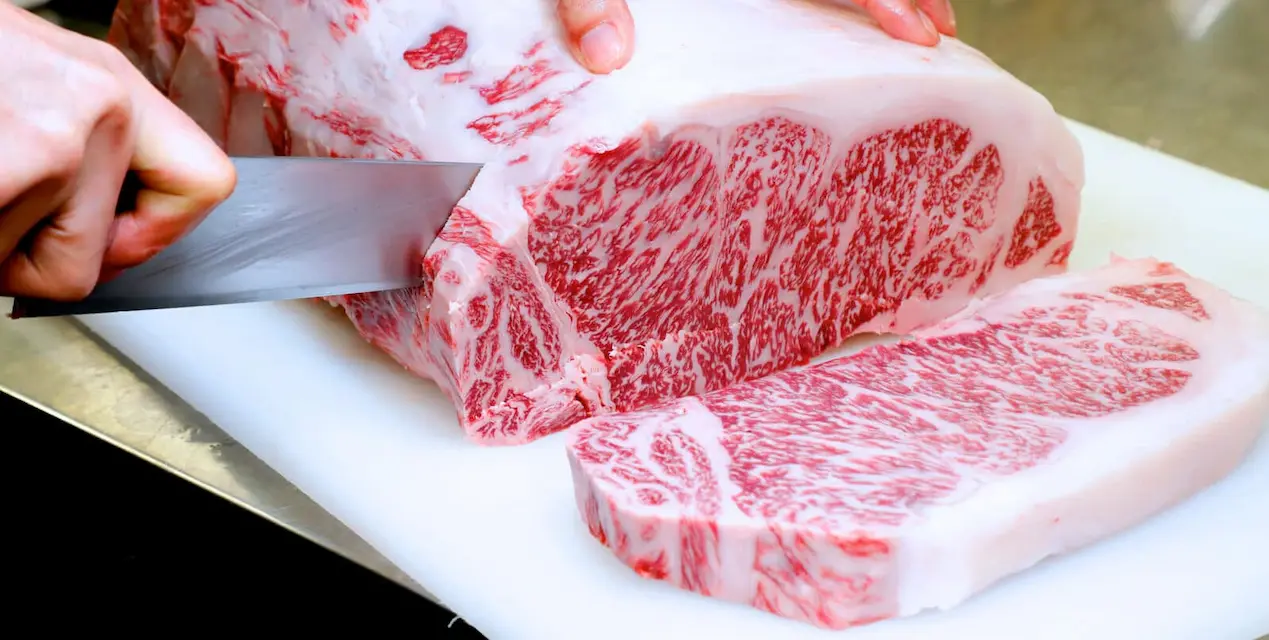
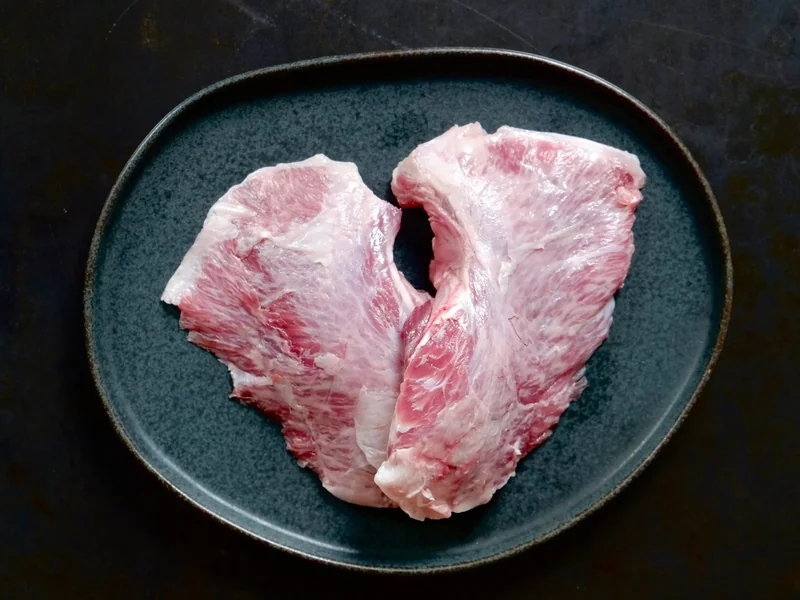
Japanese Wagyu beef steaks at Rice Market
Strip Loin
$7.50 / oz
Top Round
$6.75 / oz

How to Purchase

Location Rice Market, lower level · 1608 14th Street NW, Washington DC
Reservation No reservation needed — walk in during market hours
Hours 11:30am–10pm Sun–Thu · 11:30am–10:30pm Fri–Sat
Phone 202 234 2737
Sourced via Wagyu Sommelier — specialists in authentic Japanese Wagyu
Resident Partner · Japan Direct · MAFF Certified — Japanese Food & Ingredient Supporter Store

Where Is Premium Sashimi-Grade Fish Available?
- Sashimi DC

Sashimi DC is Rice Market's resident fish partner on the lower level — Keita Miyaki imports sashimi-grade fish directly from Japan, with a new shipment arriving every Wednesday and the best selection on Thursday and Friday. Sashimi DC keeps its own hours — daily 11:30 am–8 pm, different from Rice Market's — and delivers same-day across Washington DC, Northern Virginia and Maryland, daily 1–8 pm (order by 7:30 pm · $30 minimum · free delivery on food orders over $150). Every cut is traceable to a named producer.

Sashimi DC classes and Fish & Wine Pairings are held at Sashimi DC's own lower-level space.

Pickup & Delivery

Pickup Same day at Sashimi DC inside Rice Market, Lower Level
Hours Daily 11:30 am–8 pm (Sashimi DC's own hours — Rice Market stays open later)
Delivery Same day, daily 1–8 pm — Washington DC, Northern Virginia and Maryland · order by 7:30 pm · $30 minimum · free on food orders over $150
Origin Processed in Miyazaki, flown Fukuoka → Haneda → Dulles — arrives Wednesday, ~48 hours from Miyazaki
Frozen? Never frozen — aquacultured on formulated feed
Instagram @keita_sashimi_dc

Certified by Japan's Ministry of Agriculture, Forestry and Fisheries (MAFF), administered by JETRO (Cert. J000-001-410) — one of three certified establishments in Washington DC, and the only certified fish retail counter.

Nagasaki Bluefin Tuna — Core Cuts · Goto Islands · Hosei Suisan · 2× Nagasaki Prefecture Top Prize (最優秀) Winner · 2014 & 2023

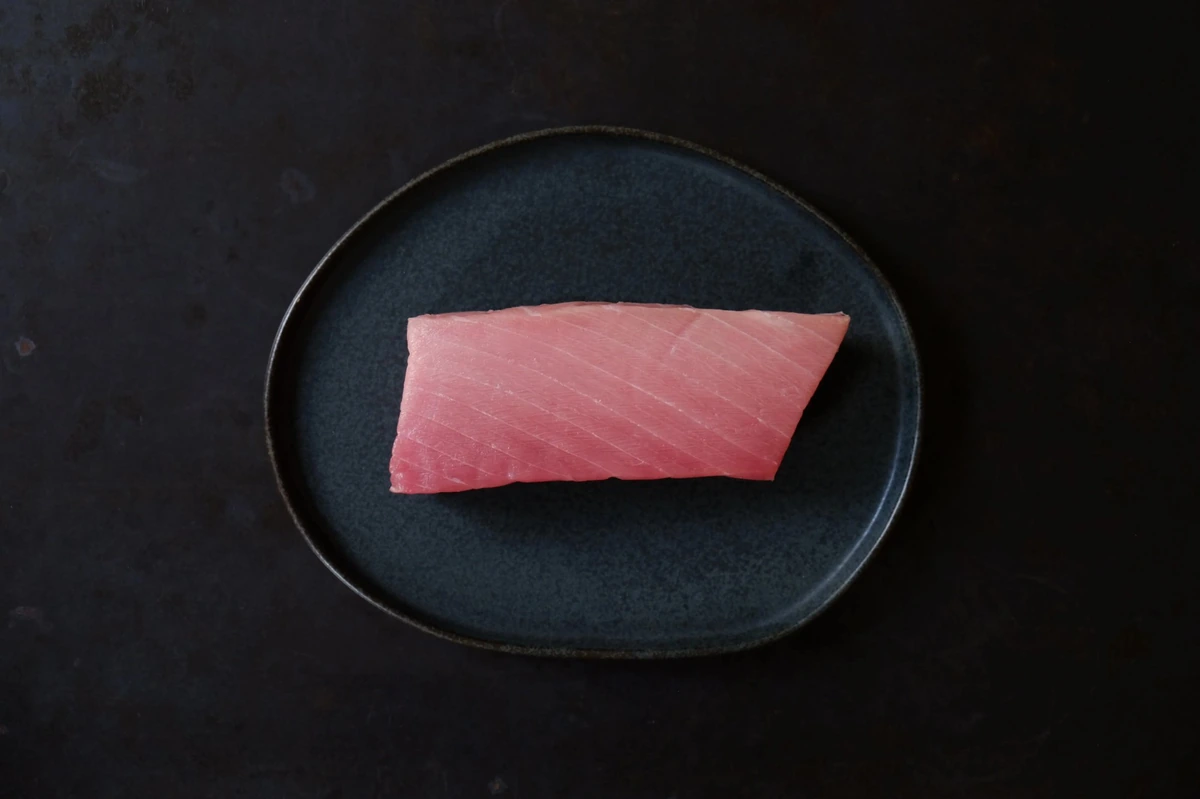
Bluefin Tuna Akami
赤身
Akami
Lean Red Meat
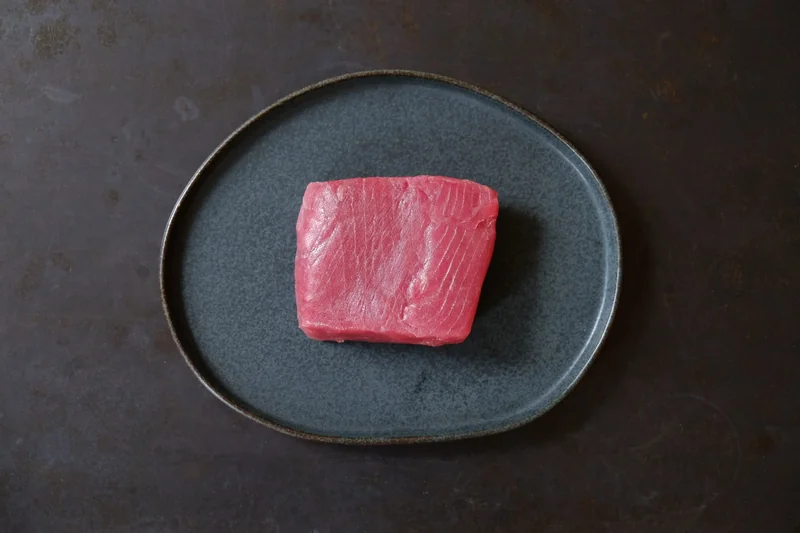
Deep ruby color, concentrated umami, clean finish. The purest expression of the fish and the ideal entry point.
$57 / ~8oz
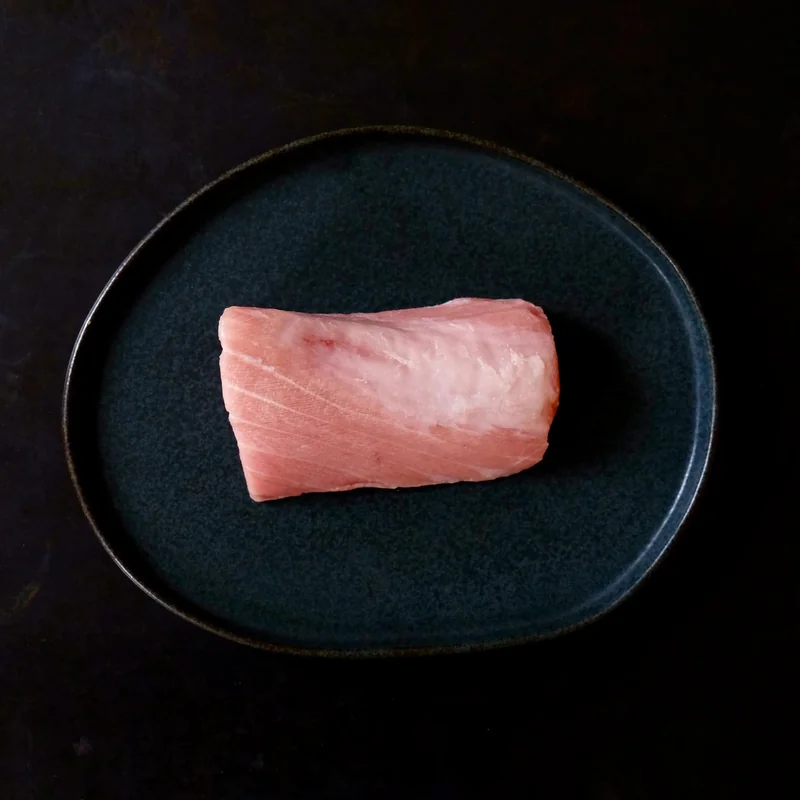
Bluefin Tuna Chutoro
中トロ
Chutoro
Medium Fatty Belly
The balance cut — fat and lean in equal measure. First-time recommendation. Rich, silky, and more complex than either extreme.
$62 / ~8oz
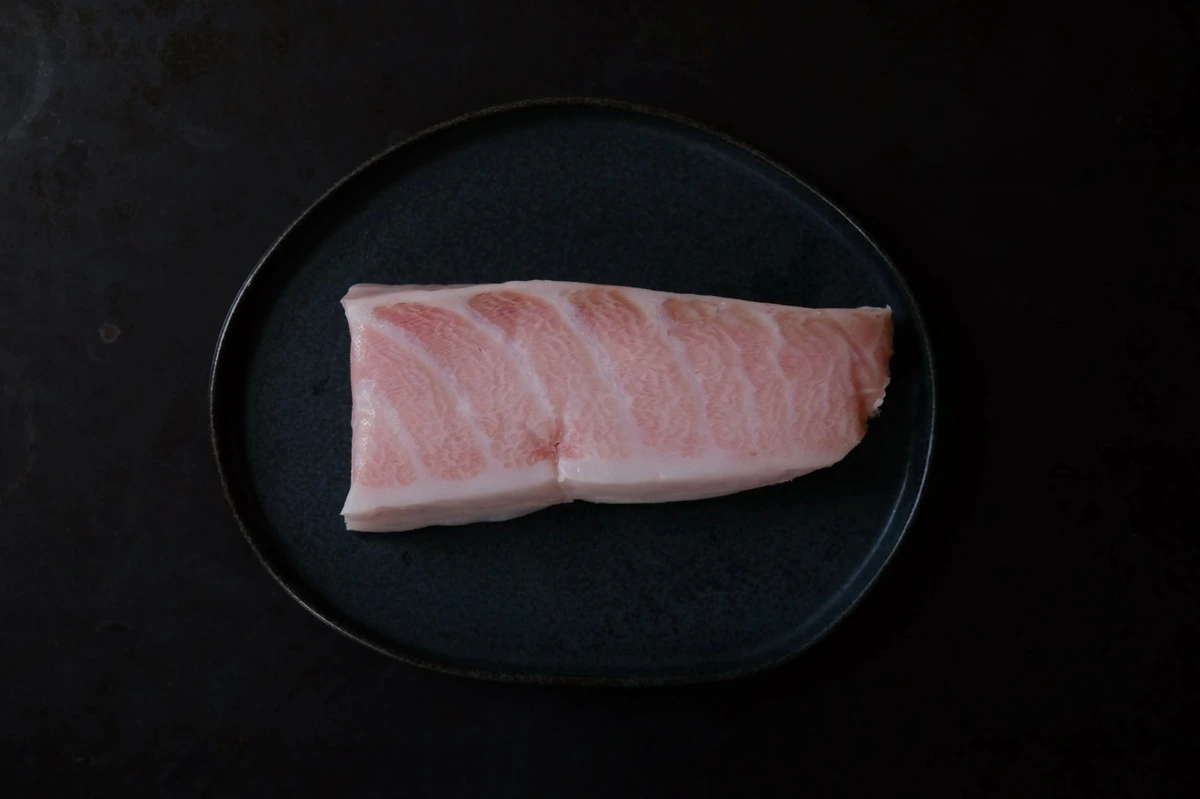
Bluefin Tuna Otoro
大トロ
Otoro
Fatty Belly
The fatty belly — Jabara, Marbling Otoro, and Kamatoro sub-cuts available. Tell us your preference at pickup.
$72 / ~8oz
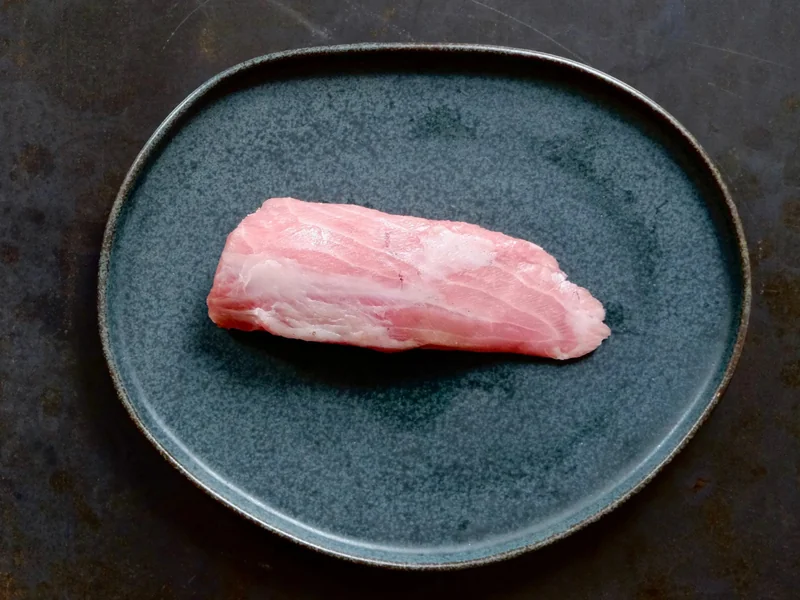
Bluefin Tuna Sujitoro
スジトロ
Sujitoro
Belly Flap
Sinew-streaked belly flap — the fattiest, most intensely marbled cut. Bold, lingering finish. An underrated entry point.
$45 / ~8oz

Nagasaki Bluefin Tuna — Rare Cuts · Market Price

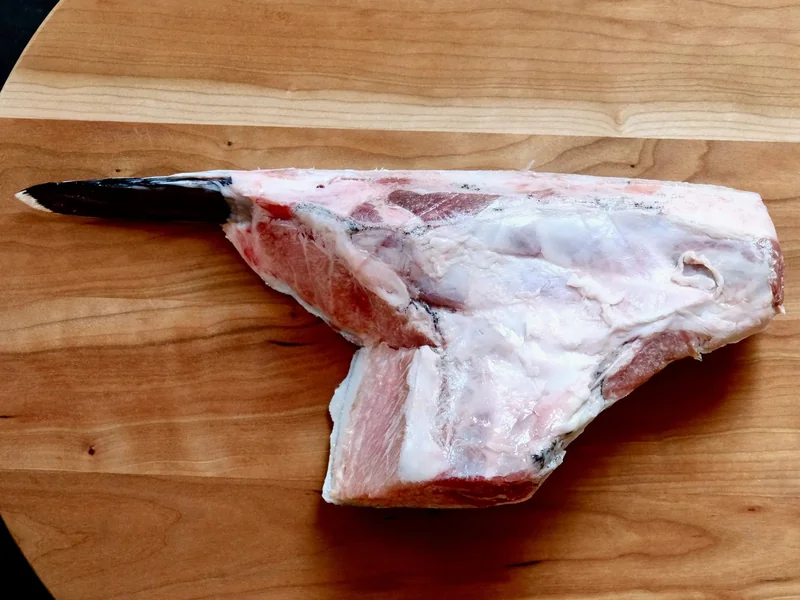
Bluefin Tuna Kama
カマ
Kama
Collar
The fattiest bone-in cut of the Nagasaki Bluefin. Outstanding grilled as Kama Shioyaki. Available fresh, never frozen.
Market price
Bluefin Tuna Hohoniku
頬肉
Hohoniku
Cheek Meat
Two small medallions per fish. Dense, meaty, intensely flavored — character closer to premium beef than any other cut.
Market price
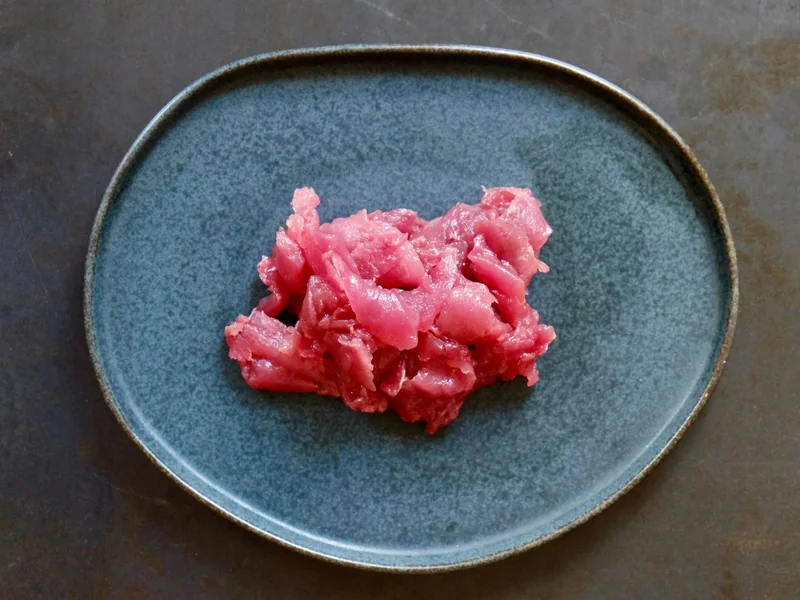
Bluefin Tuna Nakaochi
中落ち
Nakaochi
Rib-Scraped Meat
Hand-scraped from between the ribs. Soft, spreadable, concentrated flavor — the classic base for Negitoro.
Market price
Bluefin Tuna Zuniku
頭肉
Zuniku
Forehead Meat
Only two per fish — taken from the frontal skull. Richer in fat than Otoro, uniformly silky edge to edge. Among the rarest cuts in any Japanese market. Lightly seared or raw.
Market price

Other Sashimi-Grade Fish

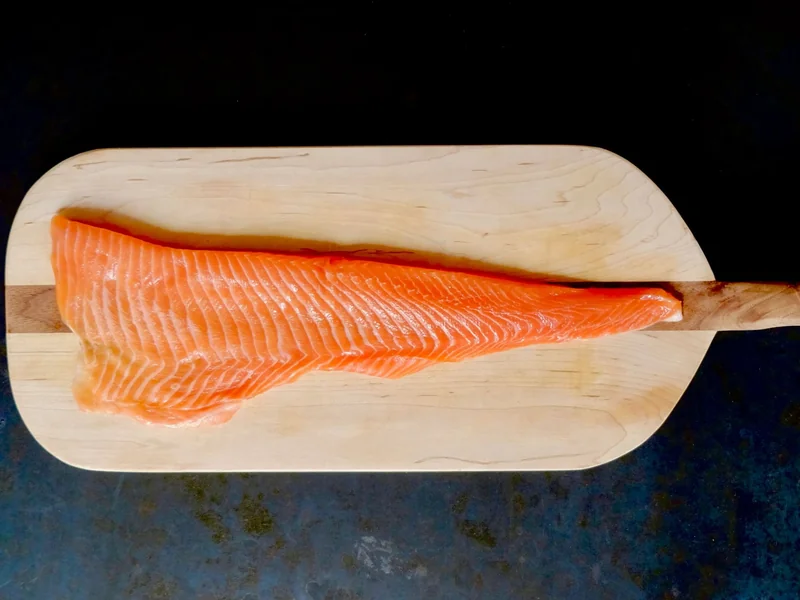
Sasshu Salmon
薩州サーモン
Sasshu Salmon
Kagoshima, Japan · US Exclusive
Farm-raised on Chiran tea and mineral-rich groundwater. Clean, layered flavor. The only place outside Japan where this salmon is available.
$70 / ~10oz
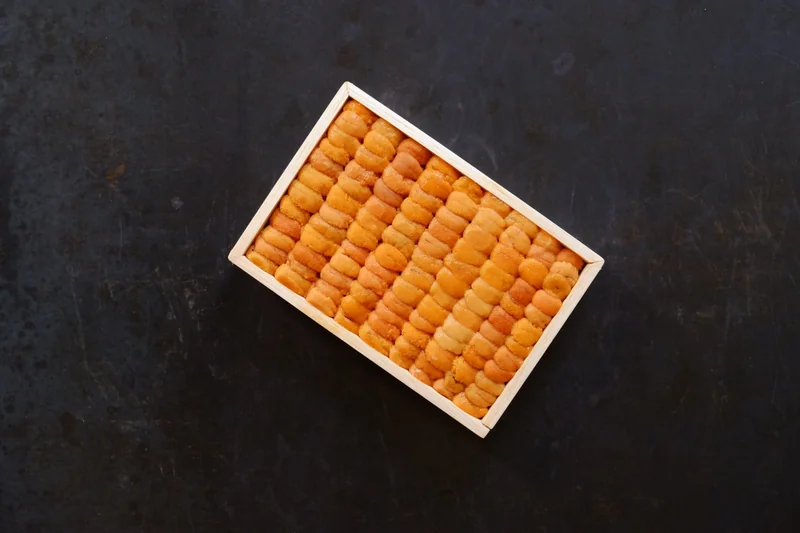
Hokkaido Uni
雲丹
Hokkaido Uni
Sea Urchin · Seasonal
Bafun or Murasaki Uni from Hokkaido. Creamy, oceanic, intensely flavored. Seasonal availability — check current stock online.
Market price
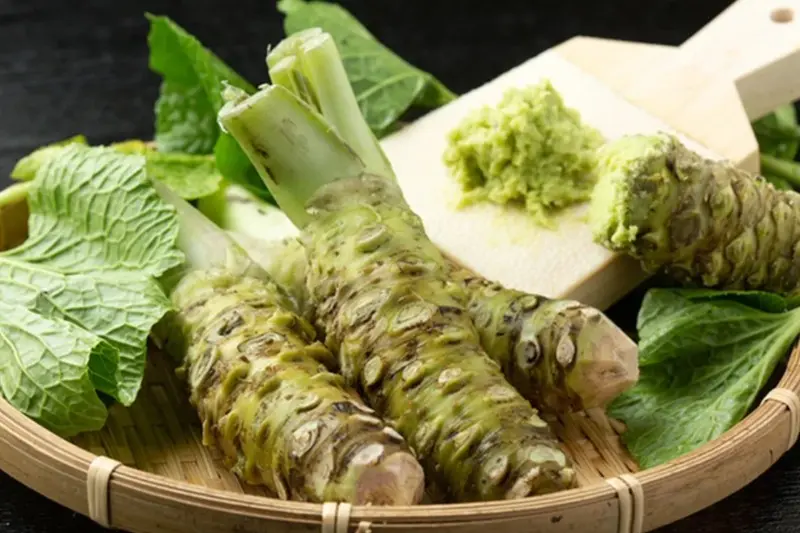
Fresh Wasabi — Real Wasabia japonica from Shizuoka
本山葵
Fresh Wasabi
Real Wasabia japonica · Shizuoka
Real Wasabia japonica from Shizuoka Prefecture — not the green paste found everywhere else. Grate immediately before serving. $15/oz.
$15 / oz
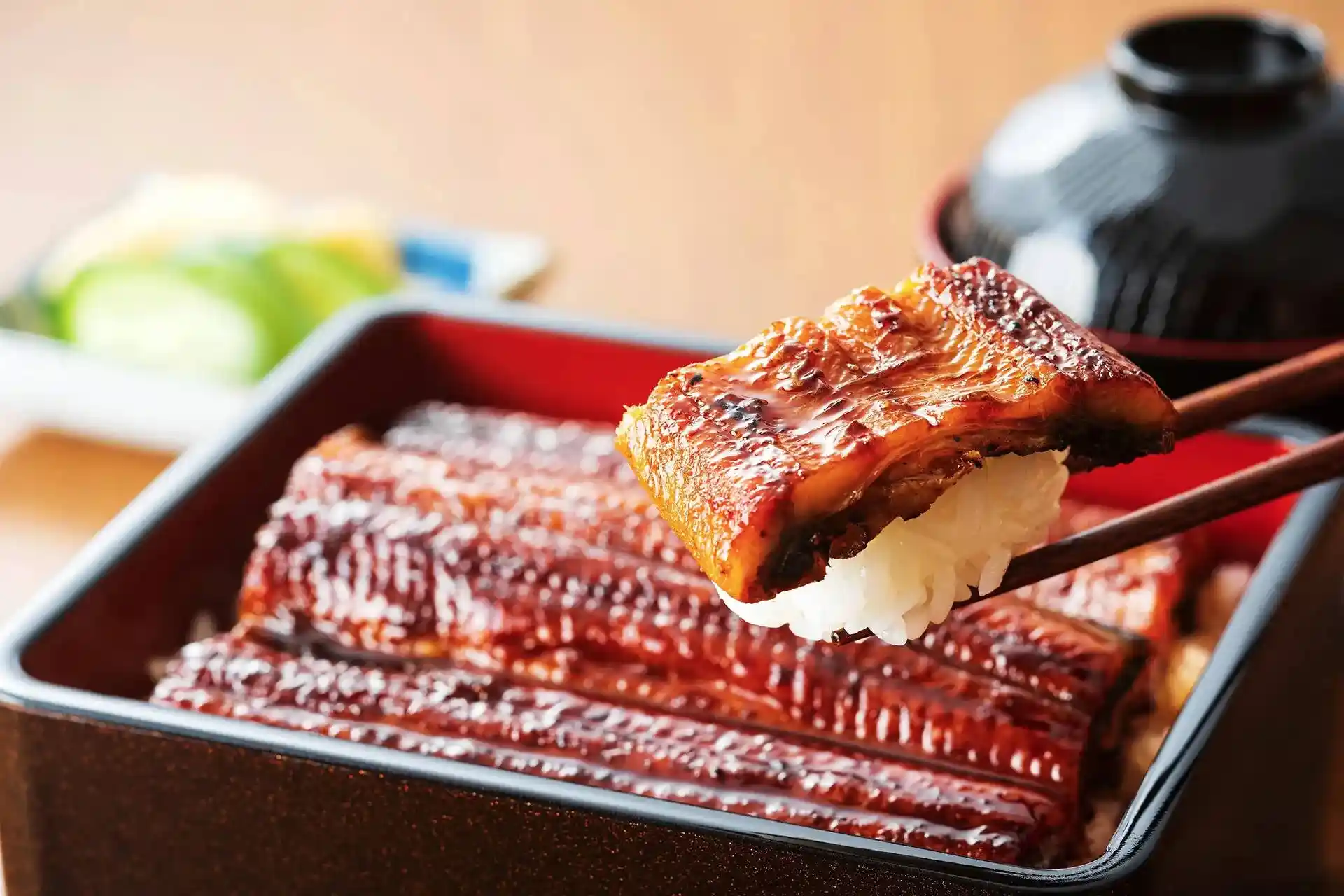
Kagoshima Unagi Kabayaki
鰻蒲焼
Unagi Kabayaki
Kagoshima · Japan Food Selection Grand Prix
Eel kabayaki from Daishin, Kagoshima. Additive-free tare — no colorings, no MSG. 90-meter steam line for uniform tenderness. Japan Food Selection Grand Prix, December 2025.
$40 / pc
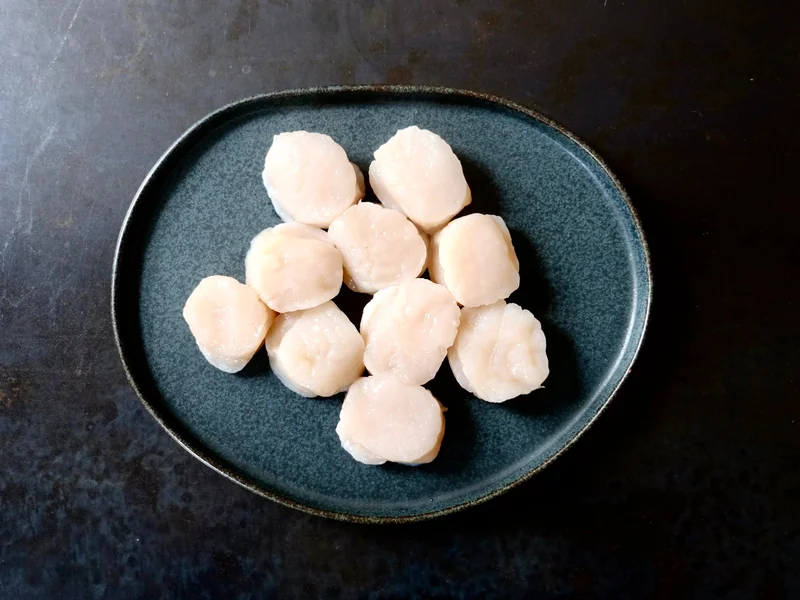
Hokkaido Scallops Hotate
帆立貝
Hokkaido Scallops
Hokkaido · No phosphate treatment
Dry Hotate from Hokkaido — no STPP/phosphate treatment. Two peak seasons: summer (Okhotsk) and winter (Funka Bay). The difference from treated scallops is immediate.
$34.50 / ~5 oz
Shop all Sashimi DC fish →

Same-day delivery areas

Adams Morgan Anacostia Bloomingdale Brookland Capitol Hill Chevy Chase DC Cleveland Park Columbia Heights Dupont Circle Foggy Bottom Georgetown H Street Corridor Logan Circle Mount Pleasant Navy Yard / The Wharf NoMa Penn Quarter Petworth Shaw Southwest Waterfront Takoma DC Tenleytown / AU Park U Street Corridor Van Ness Woodley Park

All DC neighborhoods →

Arlington Alexandria McLean Tysons Annandale Falls Church Merrifield Vienna Springfield Kingstowne Burke Fairfax Great Falls Mount Vernon Reston ◑ Herndon ◑ Lorton ◑ Occoquan ◑ Chantilly (East) ◑ Sterling (Sugarland) ◑

◑ Partial — road-adjacent addresses only. Full Virginia coverage →

Silver Spring Bethesda Rockville Potomac North Bethesda Chevy Chase Hyattsville Takoma Park Colesville Burtonsville Laurel Greenbelt College Park Lanham Seabrook Largo Clinton Fort Washington Mitchellville Gaithersburg ◑ Olney ◑ Sandy Spring ◑ North Potomac ◑ Fulton (Maple Lawn) ◑ Bowie ◑ Upper Marlboro ◑ Brandywine ◑ Waldorf (north) ◑ Crofton ◑

◑ Partial — road-adjacent addresses only. Full Maryland coverage →

What Is Japanese Wagyu?

The word Wagyu (和牛) literally means Japanese beef — Wa (Japanese) + Gyu (beef). Japan defines Wagyu as one of four specific cattle breeds raised entirely in Japan. What you'll find at most restaurants labeled "wagyu" in the US is American or Australian cattle with a small percentage of Wagyu genetics — a far cry from the real thing. Pair your Wagyu with sake or wine from Rice Market's 100+ label selection.

Japanese Wagyu cattle are raised for 30–36 months (vs ~20 months for American beef), fed original farm recipes, and often tended individually on small farms averaging just 54 head. Each animal carries a 10-digit traceability number recording its birth date, farm, and entire chain of custody. For deeper context on breeds, brands, and procurement, visit Wagyu Sommelier — our sourcing partner.

01
Shimofuri Marbling
Japanese Wagyu is genetically the most marbled cattle breed in the world. The fat is distributed in intricate webs throughout the lean meat — so fine it appears like a thin frost (shimofuri). This creates a texture similar to fatty tuna: silky, tender, with structure.
02
Wagyu-ko Flavor
Wagyu has a distinctive flavor profile unlike any other beef — richer, sweeter, with high lactone content that brings notes of peach, coconut, butter, and green plants. When cooked, it releases an intensely beefy, nutty flavor, often with a caramel finish.
03
Heart-Healthy Fat
Japanese Wagyu fat has a lower melting temperature and a higher concentration of oleic acid — the same monounsaturated fat found in olive oil — than any other beef, and more than most vegetable oils. It melts at near body temperature, creating the famous melt-in-your-mouth experience.

Breeds, Traceability
& Grades

Rice Market's Wagyu is sourced via Wagyu Sommelier, which procures Japanese Wagyu from producers and municipalities across Japan and lists more than 150 Japanese brands. Every cut Rice Market receives is fully traceable: it arrives with the animal's 10-digit traceability code, and you can ask for the code for your cut.

Not sure what is in the case today? Ask the counter team, or call 202 234 2737. For more on breeds, brands and procurement, see wagyusommelier.com.

01
Four Recognized Breeds
Japan recognizes four breeds, or crosses of them, as Wagyu. Kuroge Washu (Black-Haired) is about 95% of Japanese Wagyu, with sweet, buttery fat. Mukaku Washu (Polled) is very rare. Akage Washu (Brown-Haired) comes mainly from Kumamoto and Kochi and is leaner. Nihon Tankaku Washu (Shorthorn) comes mainly from Iwate, with lean, savory meat. Source: Wagyu Sommelier.
02
10-Digit Traceability Code
Each Japanese Wagyu carries a 10-digit number linked to its record: date of birth and sex, mother's number, breed, farm name and location, each move between locations, slaughter date, and slaughterhouse. Rice Market receives this code with its Wagyu. Ask for the code for your cut.
03
How Japanese Grades Work
Traditional Japanese grades such as A5 and B4 are used, and higher numbers generally mean more marbling. Wagyu Sommelier notes that the top USDA grade has about the same marbling as Japanese A3 or lower. Fineness of marbling (shimofuri) matters as much as the amount of fat. Source: Wagyu Sommelier.

What Is Sashimi-Grade Fish?

"Sashimi-grade" has no official US government definition — no federal agency issues a certification. The term is a self-imposed standard. When applied honestly, it rests on three non-negotiable pillars. Pair your fish with sake from Rice Market's 100+ label selection, or join a Sashimi DC Fish & Wine Pairing at its lower-level space (sashimidc.com/events).

The difference between a mediocre piece of fish and a transcendent one often begins not in the kitchen, but on the boat — with how the fish was killed, bled, and cooled in the first minutes after harvest. Keita has written a detailed explainer covering all three pillars, the chemistry of umami, and why "fresh" is frequently misused.

Full article on sashimidc.com →
01
Cold-Chain Integrity
Unbroken temperature control from the moment the fish leaves the water to your plate. A single break — one warm truck, one hour without ice — degrades proteins and produces off-flavors that cannot be reversed.
02
Parasite Management
For wild-caught fish: FDA HACCP-compliant freezing (−20°C for 7 days or −35°C rapid freeze). For aquacultured fish raised exclusively on formulated feed — including Sashimi DC's Bluefin and Sasshu Salmon — no freezing is required.
03
Ikejime Processing
A traditional Japanese harvest technique — brain spike, bleeding, spinal cord destruction, controlled cold storage — that prevents lactic acid buildup, preserves ATP, and maximizes the umami synergy between inosinate and amino acids 3–10 days post-harvest.

Frequently Asked Questions

Japanese Wagyu
Where can I buy Japanese Wagyu beef in Washington DC?
At Rice Market, lower level, 1608 14th Street NW, Washington DC. Japanese Wagyu beef steaks — Strip Loin $7.50/oz and Top Round $6.75/oz — are available at the counter with no reservation needed. Open daily 11:30am–10pm (Fri–Sat to 10:30pm). Sourced via Wagyu Sommelier.
What cuts of Japanese Wagyu are available at Rice Market?
Strip Loin at $7.50/oz and Top Round at $6.75/oz, sold by the ounce. No reservation needed — available at the lower level counter during market hours: 11:30am–10pm daily (11:30am–10:30pm Fri–Sat).
What is the difference between Japanese Wagyu and American Wagyu?
Japanese Wagyu must come from one of four specific cattle breeds raised entirely in Japan. American "wagyu" is crossbred cattle with a small percentage of Wagyu genetics — the marbling, flavor, and fat quality are substantially different. Rice Market carries only true Japanese Wagyu sourced via Wagyu Sommelier.
Do I need a reservation to buy Wagyu at Rice Market?
No. Japanese Wagyu is available for walk-in purchase at the Rice Market counter, lower level, 1608 14th Street NW, during regular market hours: 11:30am–10pm daily (11:30am–10:30pm Fri–Sat).
Sashimi-Grade Fish & Sashimi DC
Where can I buy sushi-grade fish in Washington DC?
At Sashimi DC, Rice Market's resident fish partner on the lower level, 1608 14th Street NW. It imports sashimi-grade Bluefin Tuna, Sasshu Salmon and Hokkaido Uni directly from Japan. Open daily 11:30am–8pm; order online or walk in. Visit sashimidc.com →
What does Sashimi DC sell?
Nagasaki Bluefin Tuna (Akami $57, Chutoro $62, Otoro $72, plus rare cuts), Sasshu Salmon, Hokkaido Uni and scallops, fresh wasabi and Kagoshima unagi. Stock is seasonal and changes weekly. See current stock →
When is the best time to buy sashimi-grade fish at Rice Market?
Fish arrives every Wednesday; the best selection is Thursday and Friday, and popular cuts can sell out by Saturday afternoon. Sashimi DC is open daily 11:30am–8pm. Sashimi DC guide →
Does Sashimi DC deliver?
Yes. Same-day delivery across Washington DC, Northern Virginia and Maryland, daily 1–8pm. Order by 7:30pm; $30 minimum, and delivery is free on food orders over $150. Delivery details →
Is Sashimi DC's fish CO-treated?
No. Sashimi DC never uses carbon monoxide (CO) treatment. Its Akami is naturally dark red-purple, the true color of fresh Bluefin; vivid cherry-red tuna may have been CO-treated. Raw fish safety guide →
For safety, sourcing and science questions, see sashimidc.com/raw-fish-safety-washington-dc and sashimidc.com/learn.