A cuisine built on balance
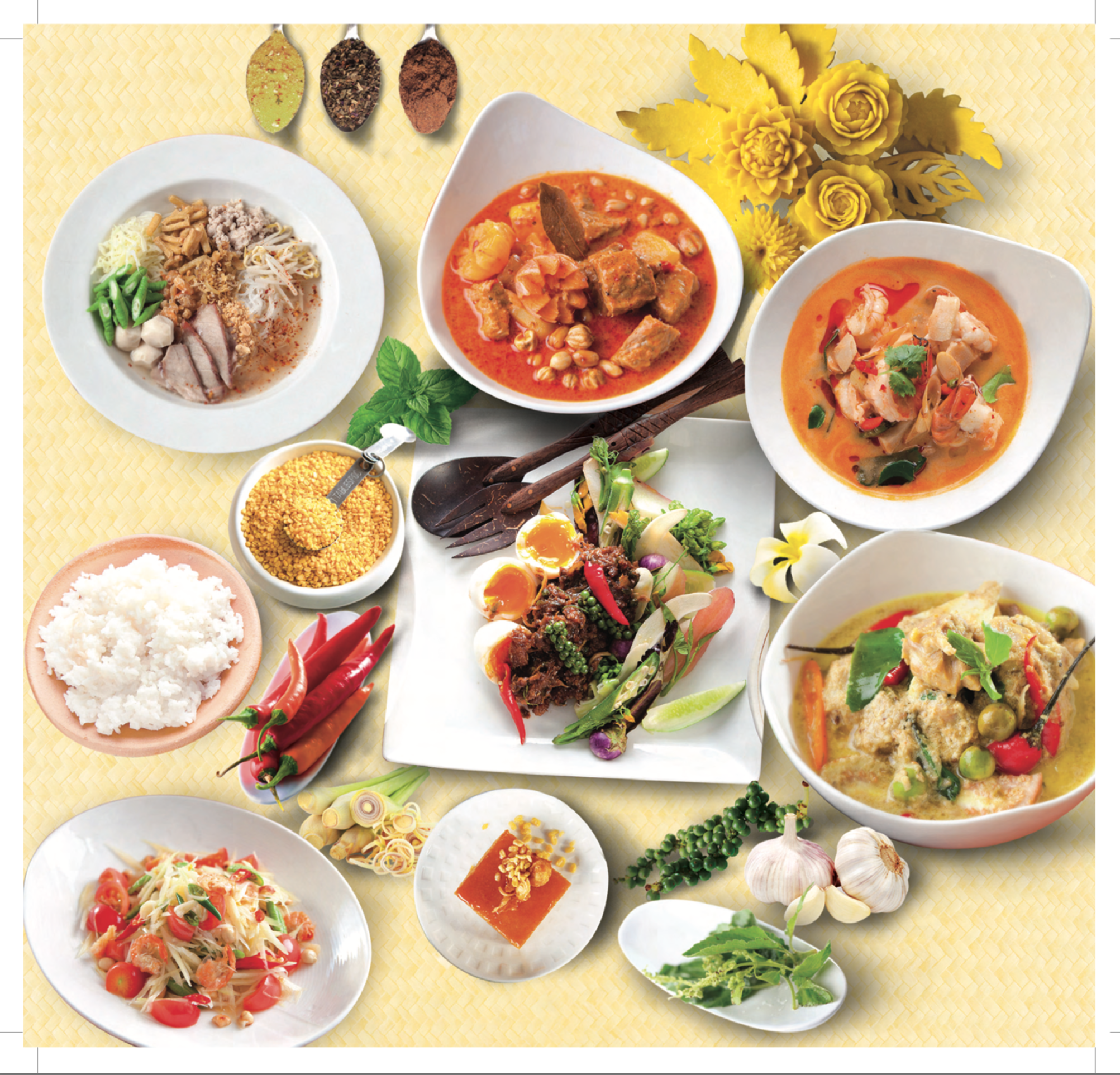
Thai cuisine has become globally popular as a result of its unique characteristics and its rich flavors, derived from a huge variety of ingredients. Each dish has its own flavor from different signature ingredients as well as the delicate and detailed process of preparation and cooking. The ingredients and the cooking process contribute to dishes that are a feast for the senses — sourness, saltiness, sweetness, the richness of coconut milk, and the fiery heat of chillies all contribute to the colour and depth that have made Thai food beloved worldwide.
The variety of herbs and spices in Thai dishes has also led to the cuisine being widely accepted as a healthy one. Massaman curry, through its rich and complex flavors, has become the most popular Thai dish on restaurant menus overseas. But the canon is broad: Tom Yum Gung (spicy sour prawn soup), Pad Thai (stir-fried rice noodles), Som Tam (papaya salad), Gaeng Khiao Wan (green curry), Khao Pad (Thai-style fried rice), and Nam Tok Moo (spicy pork salad) have all been acclaimed abroad for decades. Pad See Ew — wide noodles in sweet soy — continues to gain new audiences.
The four regions
Thai cuisine has four regional variations corresponding to the four geographical regions of Thailand. Each carries its own character, derived from local ingredients, climate, and tradition.
Strong, spicy flavors with turmeric as the signature ingredient in almost every dish. Proximity to the sea means abundant seafood. The influence of Malaysia is evident in many preparations.
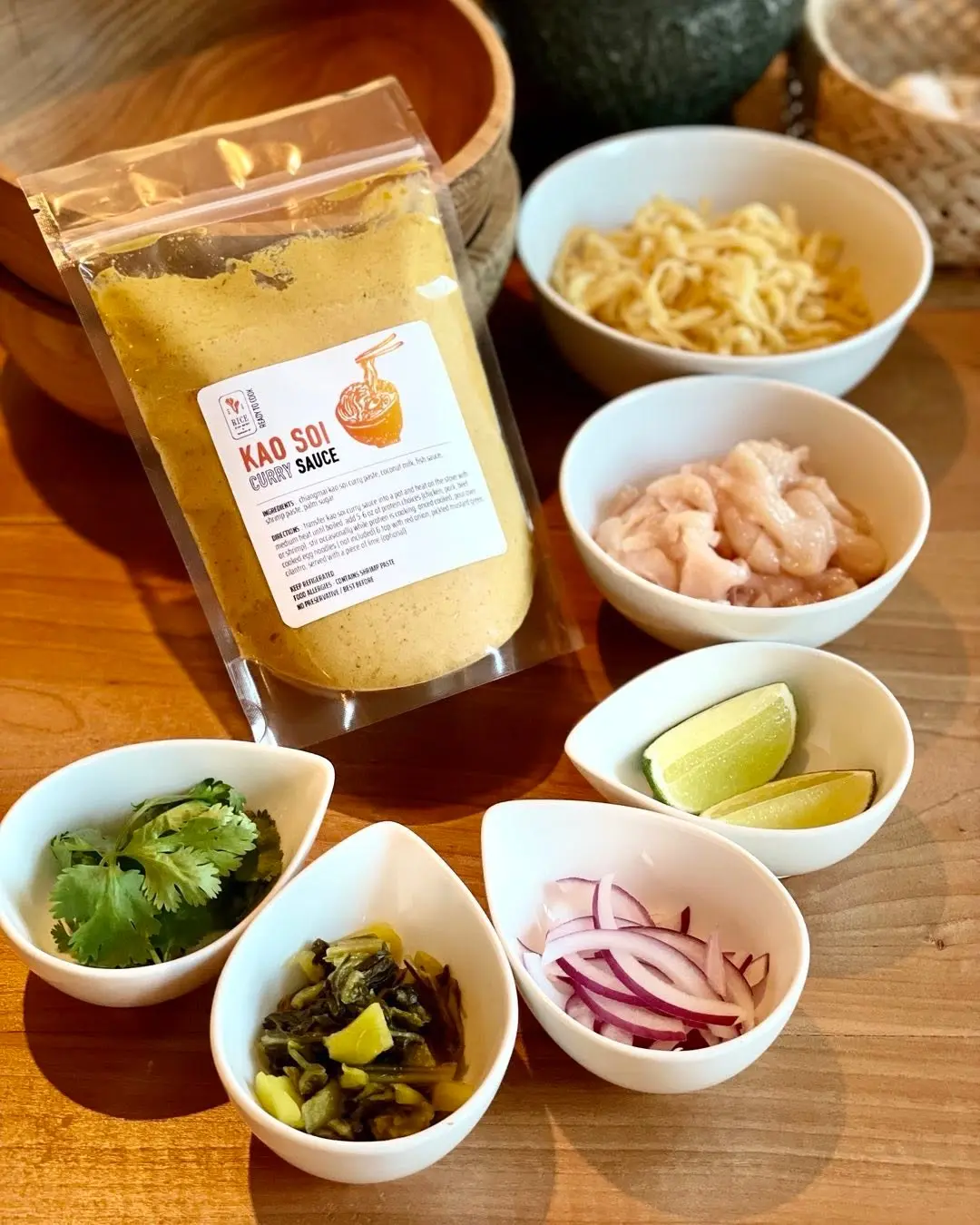
Mountainous topography and cooler climate call for richer, more warming dishes. Milder heat than the south. Kao Soi — the northern curry noodle — is perhaps the region's most celebrated dish outside Thailand.
Two dominant flavors: saltiness and spiciness. Sticky rice is the staple accompaniment. Larb (minced meat salad), Som Tam (papaya salad), and grilled meats are the region's signatures.
The most gastronomically diverse region, with access to ingredients from across the country. Chilli sauces, coconut milk curries, yum salads, and elaborate Thai desserts all have their roots here.
Signature dishes
These are the dishes that have defined Thai cuisine globally — many of which you will find on the Rice Restaurant menu.
The role of paste
Nearly every Thai recipe begins with a paste. While ready-made pastes are available — and Rice Market stocks a well-curated selection — a paste made from scratch delivers a depth of flavor, aroma, and nutrition that packaged versions cannot match. In the traditional Thai kitchen, pastes were made by pounding whole spices and herbs with a pestle and mortar. Most begin with shallots, garlic, and fresh or dried chillies, to which galangal, lemongrass, coriander, turmeric, and kaffir lime leaves are added in varying proportions. The resulting paste is the flavor engine of the dish.
Cook it at the Taste Kitchen
Reading about Thai cuisine is one thing. Rice Market's Taste Kitchen hosts regular Thai cooking classes led by collaborating chefs — including Ben Plyraharn of Urai DC and Chef Seng Luangrath of Thip Khao — where you can learn hands-on with the ingredients available in the market downstairs.